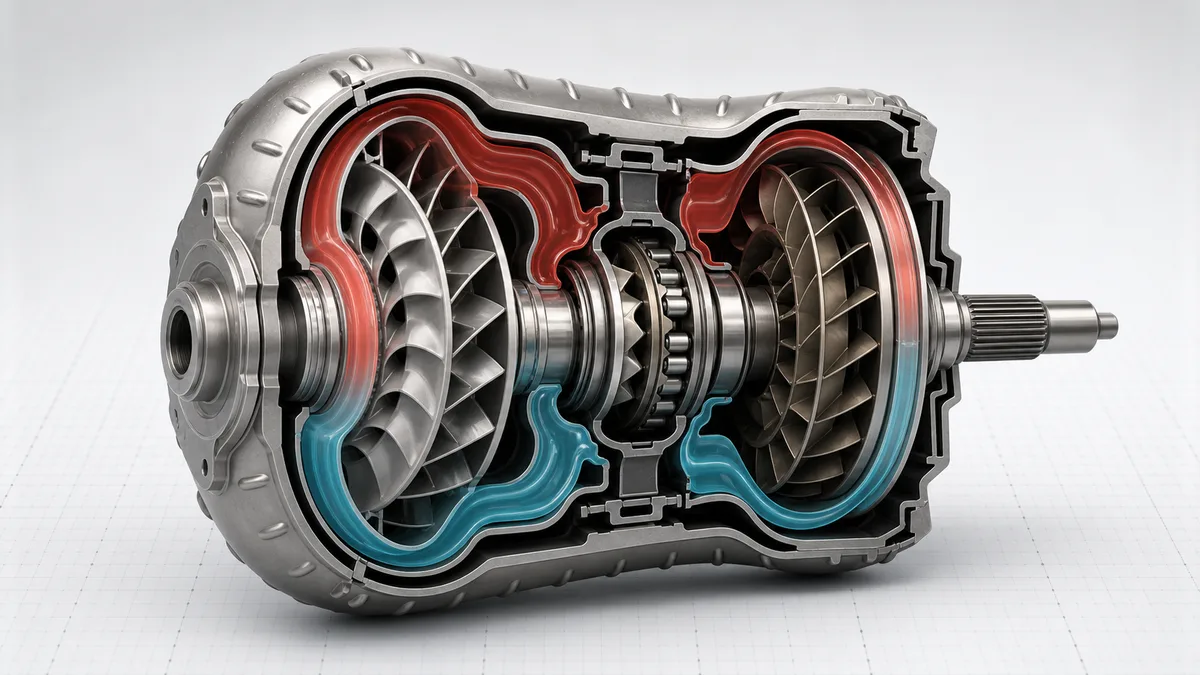
Device in an automatic transmission/transaxle that transforms mechanical power (torque) from the engine into hydro kinetic (fluid) power to the transmission.Checked 2026-08-16
Torque converter
The fluid coupling between an engine and a conventional automatic transmission.
Also called: fluid coupling · converter · lockup converter · TCC
What it means
Definition
A torque converter transfers engine torque into a conventional automatic transmission through moving transmission fluid, allowing the engine to keep running while the vehicle is stopped in gear. Most modern converters also contain a lockup clutch that creates a direct connection under suitable driving conditions to reduce slip.
Why a buyer cares
What it changes
It is one component inside the automatic-transmission system, not another name for the whole gearbox. A converter-clutch fault and an internal gear or valve-body fault can produce different repairs.
In practice
Where you meet it
In automatic-transmission descriptions and estimates naming torque converter, lockup clutch or TCC.
Two things that look alike
Not the same as
A manual transmission uses a friction clutch operated by the driver; a conventional automatic uses a torque converter and internal clutches.
Read next
Related terms
Automatic transmission
A transmission that selects its own gear ratios instead of asking the driver to use a clutch pedal.
Torque converter lockup shudder
A vibration felt while the torque converter's lockup clutch is engaging.
Valve body and shift solenoids
The hydraulic control block inside an automatic, and the electrical valves that operate it.
Where this comes from
Sources
Hybrid transmissions and dual-clutch units may not use a conventional torque converter.