The belt’s exclusive job is to transfer power from the crank pulley to all accessories through wedging and tension created by the tensioner.Checked 2026-08-16
Serpentine belt and tensioner
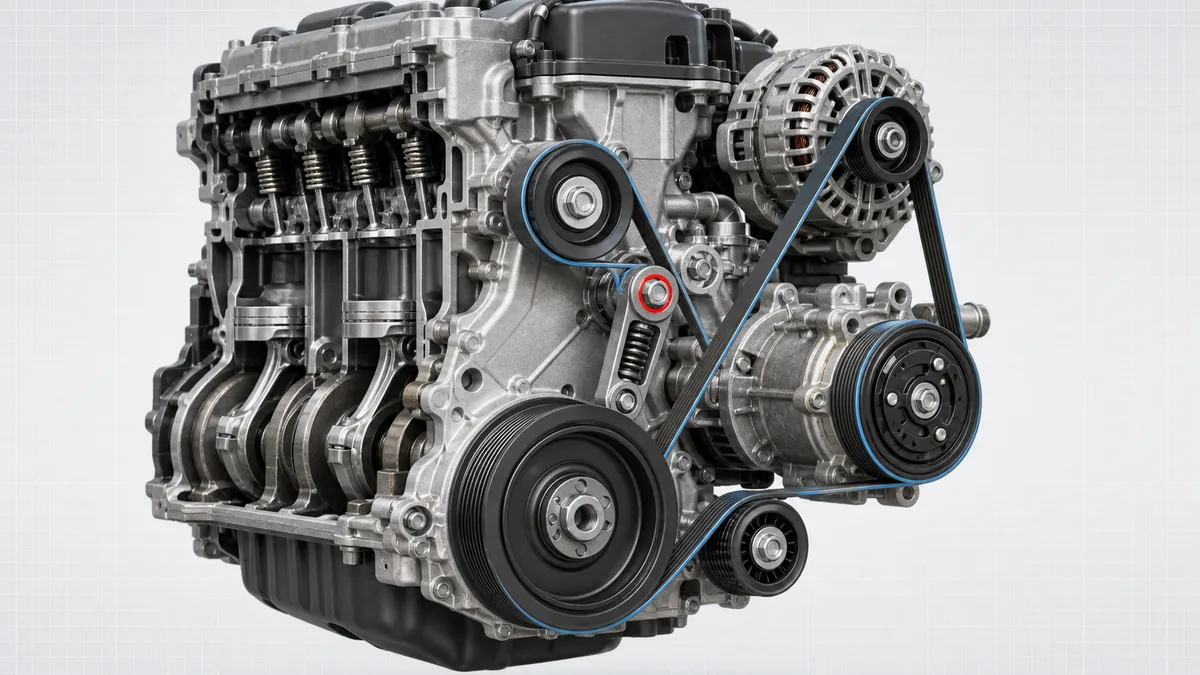
The external belt that carries crankshaft power to accessories, held at working tension by a tensioner.
Also called: accessory belt · drive belt · auxiliary belt · belt tensioner · idler pulley
What it means
Definition
The serpentine or accessory belt runs around the crankshaft pulley and one or more engine accessories, which can include the alternator, A/C compressor and coolant pump. The tensioner maintains belt tension as loads and belt condition change; idler pulleys guide its route.
Why a buyer cares
What it changes
It is outside the engine and is not the timing belt. A worn belt, weak tensioner or rough pulley can create the same noise, and losing the belt can stop every accessory it drives.
In practice
Where you meet it
At the front or side of the engine and on maintenance estimates naming belt, tensioner or idler pulley.
Two things that look alike
Not the same as
The accessory belt drives external equipment; a timing belt synchronizes crankshaft and camshaft inside a covered drive.
Read next
Related terms
Alternator and charging system
The belt-driven generator that keeps the battery charged and runs the car's electrics while the engine is running.
Engine cooling system
The coolant circuit, pump, thermostat, radiator and fan that move engine heat into the outside air.
Timing belt
A toothed rubber belt that keeps the camshaft turning in step with the crankshaft.
Air conditioning system components
The compressor, condenser, expansion valve and evaporator that move heat out of the cabin.
Where this comes from
Sources
Which accessories the belt drives varies; some coolant pumps and steering systems are electric.