Drive configuration in which the engine power is supplied to the front wheels via half shafts.Checked 2026-08-16
Front-wheel drive and rear-wheel drive
FWD sends engine power to the front wheels; RWD sends it to the rear wheels.
Also called: FWD · RWD · front drive · rear drive
What it means
Definition
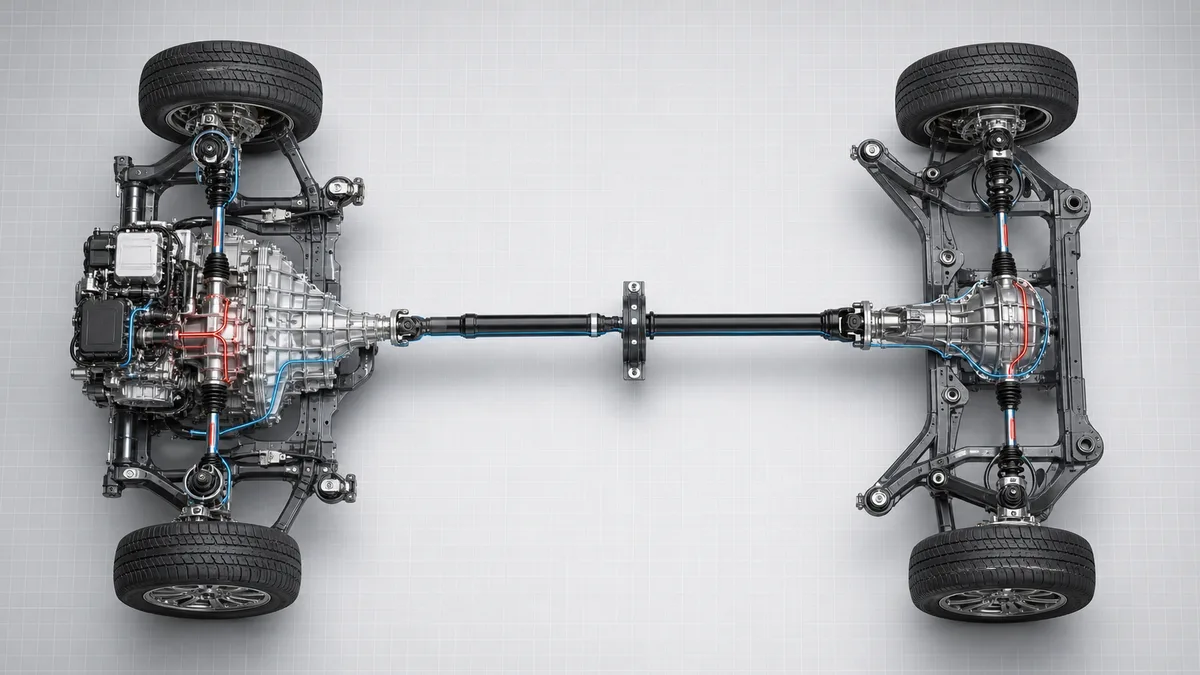
In front-wheel drive, the powertrain normally combines the transmission and final drive into a transaxle and sends torque through half shafts to the front wheels. In rear-wheel drive, a drive shaft normally carries torque rearward to a differential and rear axle shafts.
Why a buyer cares
What it changes
The layout changes which wheels pull the car and which driveline parts are present. It also changes the meaning of terms such as CV axle, drive shaft and rear differential on an inspection sheet.
In practice
Where you meet it
In the drivetrain field of a listing and on a build sheet or window sticker.
Two things that look alike
Not the same as
FWD/RWD identify the driven axle. AWD and 4WD can drive both axles.
Read next
Related terms
All-wheel drive vs four-wheel drive
Both drive four wheels; they differ in how torque is split and whether the driver engages it.
Drive shaft and CV joint
Shafts and flexible joints that carry torque from the transmission or differential to the driven wheels.
Differential
The gearset that sends torque to two wheels while allowing them to turn at different speeds in a corner.
Where this comes from
Sources
Shaft that transmits power from the transmission to the axle differential assembly on rear-wheel-drive vehicles.Checked 2026-08-16
Some electric vehicles use motors mounted directly at one or both axles and do not follow the conventional shaft layout.