The number of output shaft (on front-wheel-drive vehicles) or drive shaft (on rear-wheel-drive vehicles) revolutions required to rotate the axle one full turnChecked 2026-08-16
Axle ratio
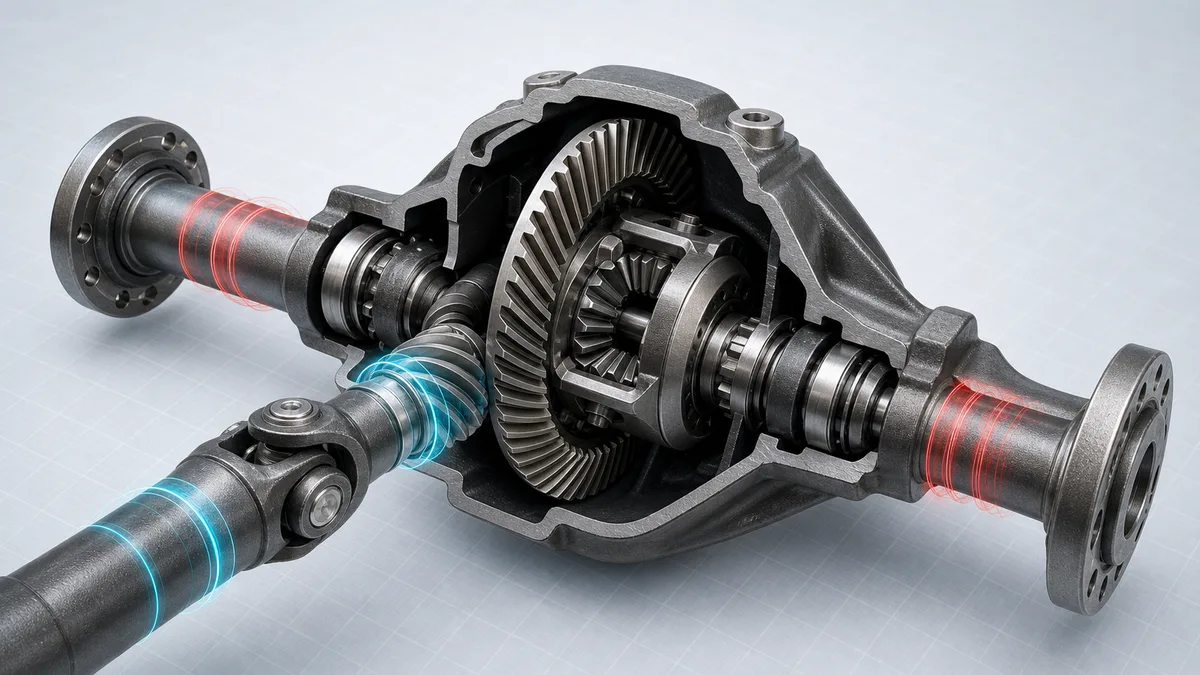
How many turns the drive shaft or transmission output makes for one turn of the axle.
Also called: final-drive ratio · rear-axle ratio · differential ratio
What it means
Definition
An axle ratio compares input rotation with axle rotation. A 3.73:1 ratio means the input turns 3.73 times for one axle turn. A numerically higher ratio generally multiplies wheel torque more, while a lower ratio generally reduces engine speed at a given road speed; the complete result also depends on the transmission and tire size.
Why a buyer cares
What it changes
Two otherwise similar trucks can have different tow ratings or cruising behavior because their axle ratios differ. The door label, build data or axle code is more reliable than an advertisement.
In practice
Where you meet it
On build sheets, towing guides and axle-code lookups, written as values such as 3.31, 3.73 or 4.10.
Two things that look alike
Not the same as
Transmission gear ratio is the ratio selected inside the gearbox; axle ratio is the fixed final reduction after it.
Read next
Related terms
Differential
The gearset that sends torque to two wheels while allowing them to turn at different speeds in a corner.
Payload and towing capacity
Payload is carried in or on the vehicle; towing capacity is the permitted loaded trailer weight.
Automatic transmission
A transmission that selects its own gear ratios instead of asking the driver to use a clutch pedal.
Where this comes from
Sources
The trade-off described is general; vehicle gearing, tire diameter and control software affect the final behavior.