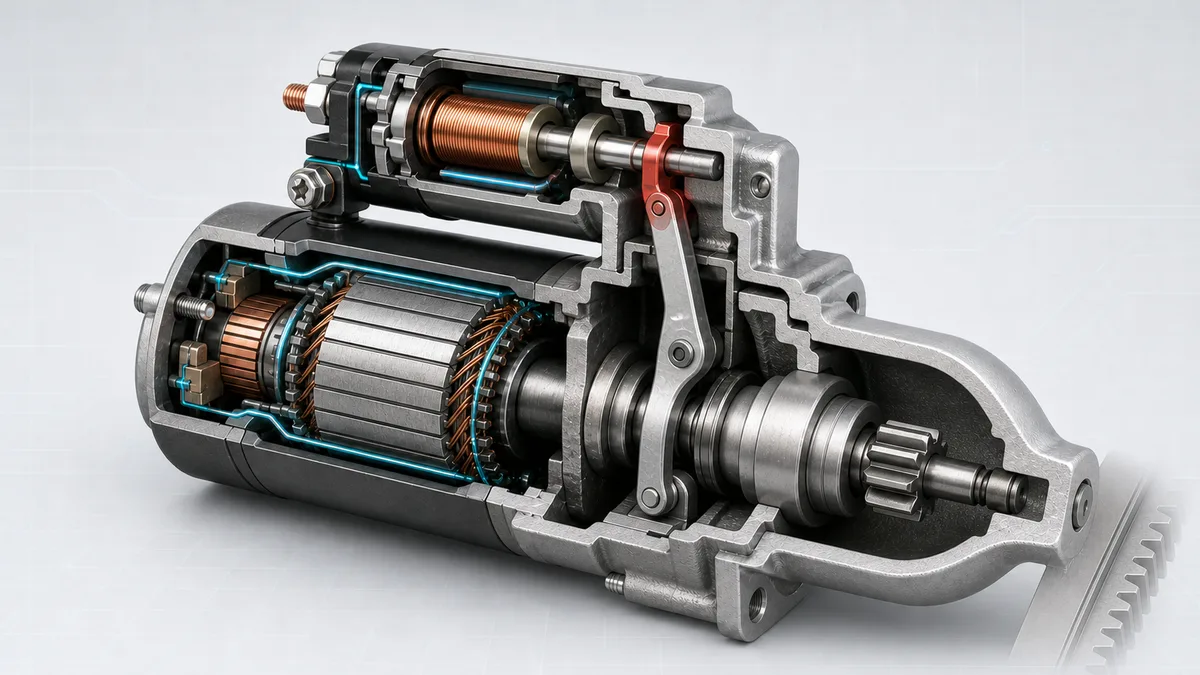
This is an electrical motor that cranks the engine by moving a drive gear into the flywheel, thereby rotating the crankshaft.Checked 2026-08-16
Starter motor and solenoid
The electric motor that cranks the engine and the switch that engages it with the flywheel.
Also called: starter · starter motor · starter solenoid · starting motor
What it means
Definition
When the driver requests a start, the solenoid acts as a heavy-current switch and moves the starter drive into engagement with the engine’s flywheel or flexplate. The starter motor then turns the crankshaft until combustion can keep the engine running on its own.
Why a buyer cares
What it changes
The starter does not charge the battery — that is the alternator’s job. A click, slow crank or no crank can involve the battery, cables, control circuit, solenoid or motor, so the sound alone is not a complete diagnosis.
In practice
Where you meet it
In no-crank diagnosis and on estimates naming a starter assembly, starter motor or solenoid.
Two things that look alike
Not the same as
The starter turns the engine during starting; the alternator generates electricity after the engine is running.
Read next
Related terms
12-volt battery
The low-voltage battery that powers control systems and, on combustion cars, supplies starter current.
Alternator and charging system
The belt-driven generator that keeps the battery charged and runs the car's electrics while the engine is running.
Fuses and relays
A fuse opens an overloaded circuit; a relay lets a low-current control switch a higher-current circuit.
Where this comes from
Sources
This is an electrical switch on the starter that once energized allows the starter to engage the drive gear into the flywheel during starting.Checked 2026-08-16
Start-stop systems, hybrids and some newer powertrains can use different starting hardware or a motor-generator instead of a conventional starter.