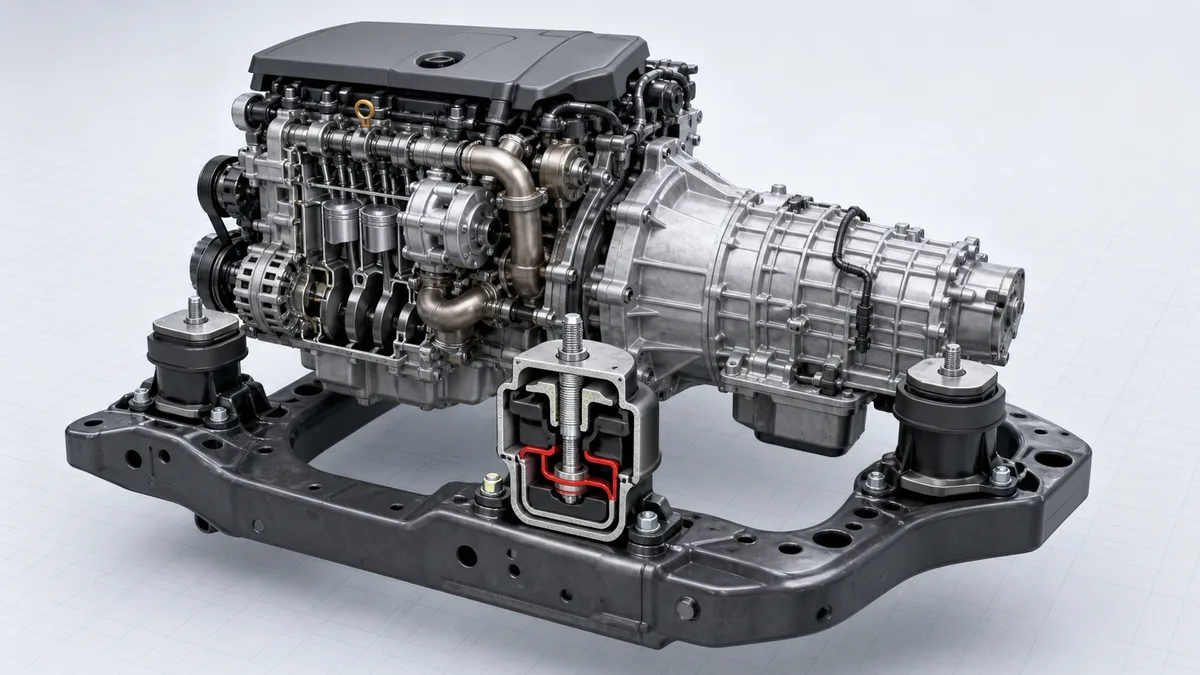
An engine mount filled with fluid (glycol)Checked 2026-08-16
Engine and transmission mounts
Rubber or fluid-filled supports that hold the powertrain while isolating its normal vibration from the body.
Also called: motor mount · engine mount · transmission mount · hydraulic mount
What it means
Definition
Mounts locate the engine and transmission in the vehicle while allowing controlled movement and isolating vibration. A hydraulic mount adds fluid chambers so its response can be tuned for different vibration frequencies; other mounts use rubber, and some modern designs are actively controlled.
Why a buyer cares
What it changes
A worn mount can create a thump, excess movement or vibration without an internal engine fault. Because several mounts share the load, the estimate should identify which mount and how it was tested.
In practice
Where you meet it
On noise-and-vibration inspections and repair estimates naming upper, lower, torque or transmission mounts.
Two things that look alike
Not the same as
A suspension bushing isolates road movement; a powertrain mount supports the engine or transmission.
Read next
Related terms
Where this comes from
Sources
This type of engine mount can be made to react to different vibration frequencies compared to a conventional rubber mount that is designed for one specific frequencyChecked 2026-08-16
Mount count, position and whether a mount is passive, hydraulic or active vary by vehicle.