Electric traction motor: Using power from the traction battery pack, this motor drives the vehicle's wheels.Checked 2026-08-16
EV traction motor and inverter
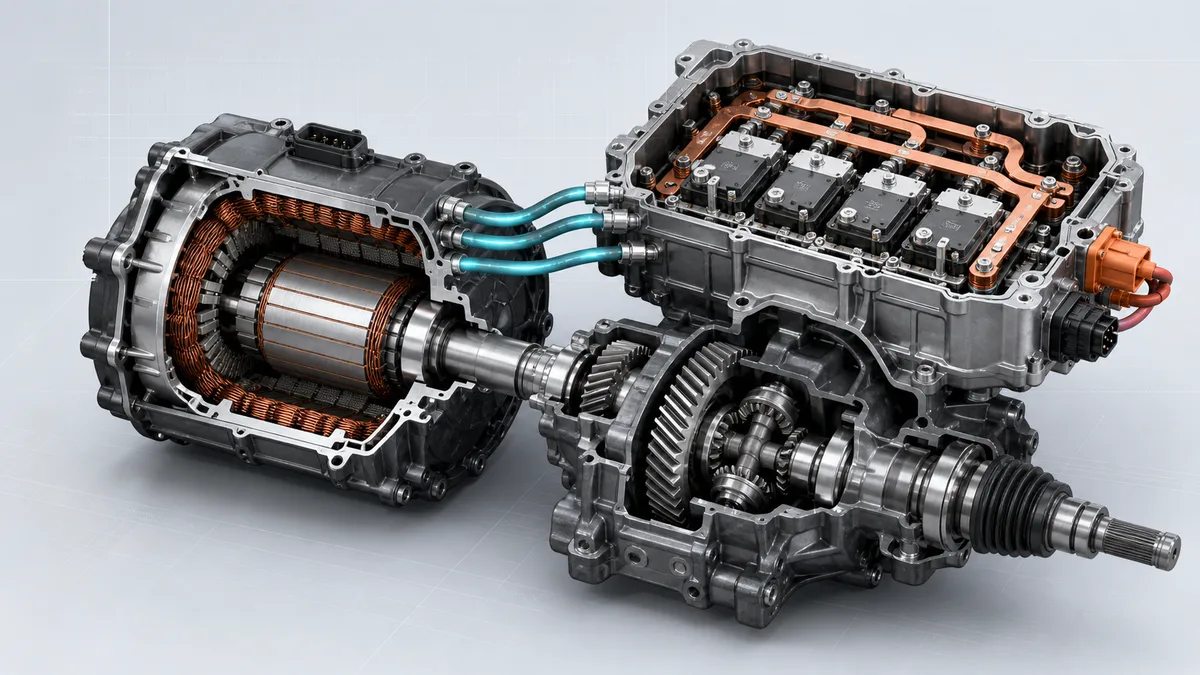
The traction motor drives the wheels; the inverter controls the electrical power that produces its speed and torque.
Also called: electric traction motor · drive motor · inverter · power electronics controller
What it means
Definition
An electric traction motor converts electrical energy from the traction battery into wheel-driving torque. The power-electronics controller — commonly called the inverter — manages electrical flow to the motor, controlling the motor’s speed and torque; during regenerative braking, the path can reverse so the motor generates electricity.
Why a buyer cares
What it changes
‘Electric motor’ and ‘inverter’ are not two names for one part. Service records may name a drive-unit assembly that contains both, but diagnosis and warranty coverage can still distinguish their functions.
In practice
Where you meet it
In EV and hybrid specifications, drive-unit descriptions and high-voltage repair records.
Two things that look alike
Not the same as
The traction battery stores energy; the inverter controls it; the motor converts it into motion.
Read next
Related terms
EV DC/DC converter and onboard charger
The onboard charger fills the high-voltage battery; the DC/DC converter supplies the car’s low-voltage system.
Hybrid traction battery
The high-voltage pack that drives a hybrid's electric motor, separate from the 12-volt battery that starts the car.
Regenerative braking
Slowing a hybrid or EV with the drive motor, returning energy to the battery.
Where this comes from
Sources
Power electronics controller: This unit manages the flow of electrical energy delivered by the traction battery, controlling the speed of the electric traction motor and the torque it produces.Checked 2026-08-16
Motor type and the number and placement of drive units vary by vehicle.