DC/DC converter: This device converts higher-voltage DC power from the traction battery pack to the lower-voltage DC power needed to run vehicle accessories and recharge the auxiliary battery.Checked 2026-08-16
EV DC/DC converter and onboard charger
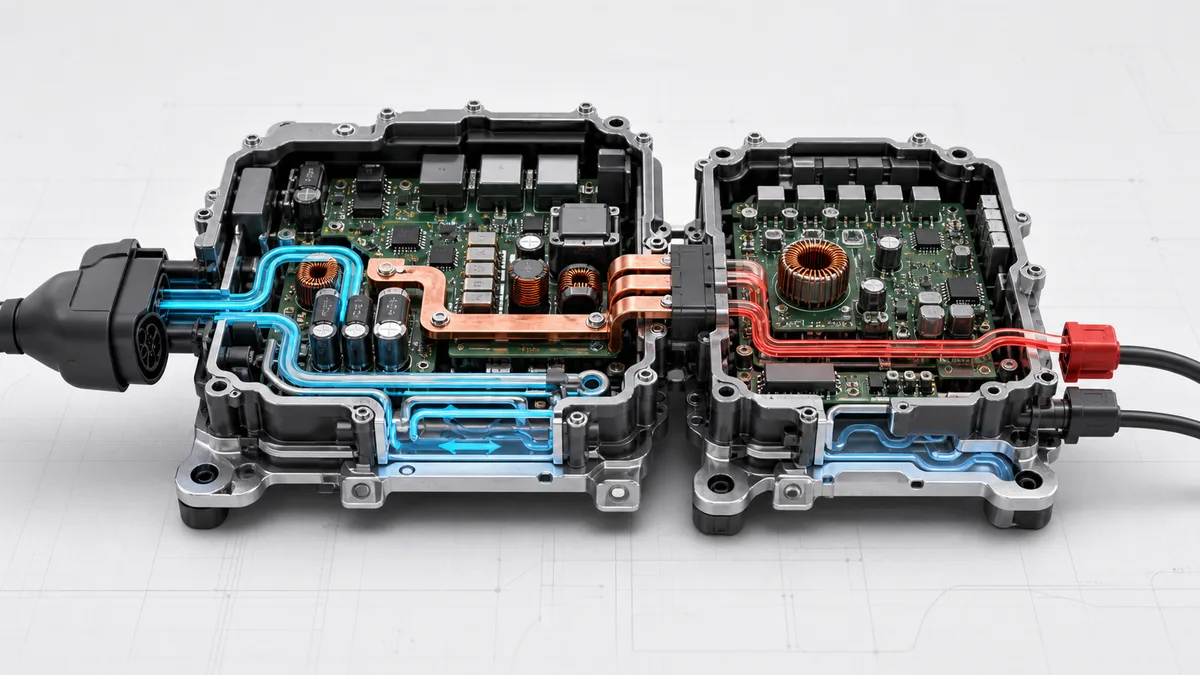
The onboard charger fills the high-voltage battery; the DC/DC converter supplies the car’s low-voltage system.
Also called: DC/DC converter · OBC · on-board charger · onboard charger
What it means
Definition
When AC charging is used, the onboard charger converts incoming AC electricity to DC for the traction battery. A separate DC/DC converter steps the traction battery’s high DC voltage down to the lower voltage used by accessories and to recharge the auxiliary battery.
Why a buyer cares
What it changes
Both are power converters, but they serve different electrical paths. A car that will not AC-charge and a car whose 12-volt system is not being supported are not describing the same component.
In practice
Where you meet it
In EV specifications, charging diagnosis and service records using OBC or DC/DC.
Two things that look alike
Not the same as
The onboard charger handles AC charging input; a DC fast charger converts AC to DC outside the vehicle and feeds the battery through the charge port.
Read next
Related terms
EV traction motor and inverter
The traction motor drives the wheels; the inverter controls the electrical power that produces its speed and torque.
Hybrid traction battery
The high-voltage pack that drives a hybrid's electric motor, separate from the 12-volt battery that starts the car.
12-volt battery
The low-voltage battery that powers control systems and, on combustion cars, supplies starter current.
Where this comes from
Sources
Onboard charger: Takes the incoming AC electricity supplied via the charge port and converts it to DC power for charging the traction battery.Checked 2026-08-16
Some vehicles combine power-electronics functions in one housing even though their functions remain distinct.