The electronic engine management system measures the speed, position and, optionally, the rotational direction of the crankshaft via the crankshaft speed sensor.Checked 2026-08-16
Crankshaft and camshaft position sensors
Sensors that tell the engine computer crankshaft speed and position and where the camshaft is in its cycle.
Also called: crank sensor · CKP sensor · cam sensor · CMP sensor
What it means
Definition
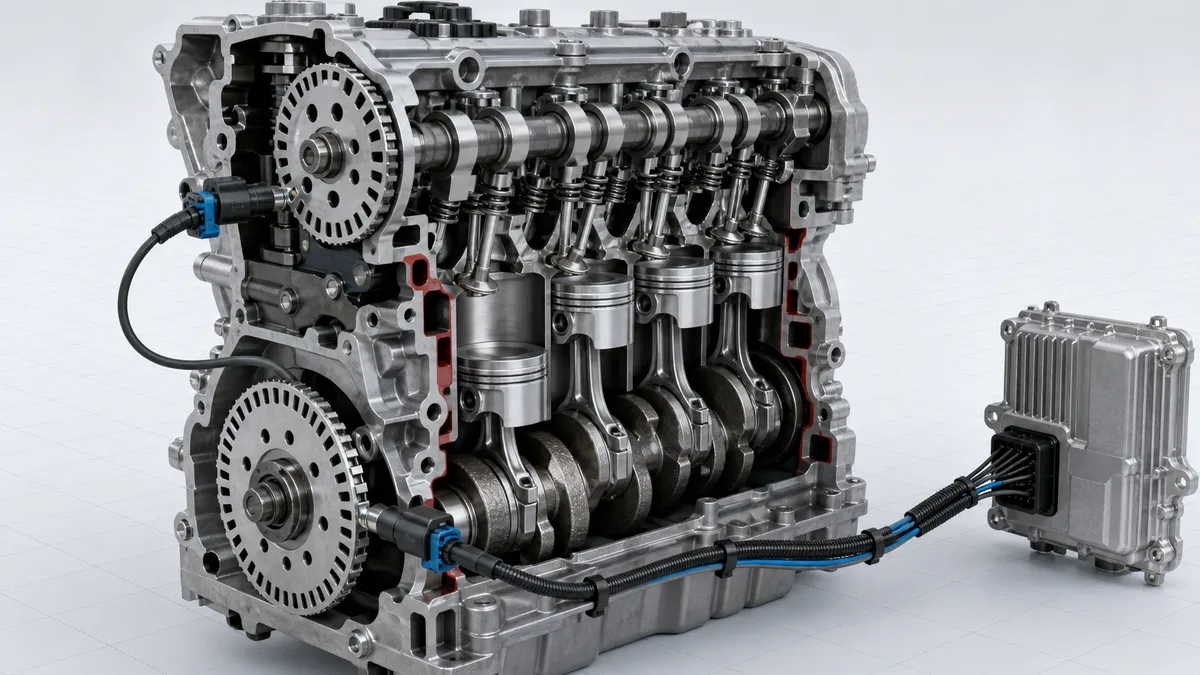
The crankshaft position sensor reports crankshaft speed and angular position so the engine computer can time ignition and fuel injection. The camshaft position sensor identifies the camshaft’s position, helping the computer distinguish the engine’s cycle and control sequential injection and variable valve timing where fitted.
Why a buyer cares
What it changes
Either sensor can produce starting, stalling or running symptoms, but their names are not interchangeable. A fault code identifies the circuit or signal the computer disliked; it does not automatically condemn the sensor itself.
In practice
Where you meet it
In no-start diagnosis and trouble codes containing CKP, CMP, crankshaft position or camshaft position.
Two things that look alike
Not the same as
A knock sensor listens for combustion vibration; crank and cam sensors report rotating position.
Read next
Related terms
Diagnostic Trouble Code (DTC)
The code an OBD-II system stores to identify which monitored system it found a fault in.
Powertrain Control Module (PCM)
The onboard computer that runs the engine and, on many cars, the transmission.
Variable valve timing (VVT)
A system that changes when — and sometimes how far — the valves open, instead of one fixed setting.
Engine knock and the knock sensor
Knock is the mixture igniting on its own; the knock sensor hears it so the computer can pull timing.
Where this comes from
Sources
The engine control unit uses the camshaft position sensor to record the exact position of the camshaft.Checked 2026-08-16
Sensor construction and the number of sensors vary by engine.