Usually contains platinum, palladium and/or rhodium, which acts as a catalyst in a chemical reaction that converts unburned hydrocarbons, carbon monoxide and oxides of nitrogen into water vapor, carbon dioxide and other gases that are less toxic than untreated exhaust fumesChecked 2026-08-16
Catalytic converter
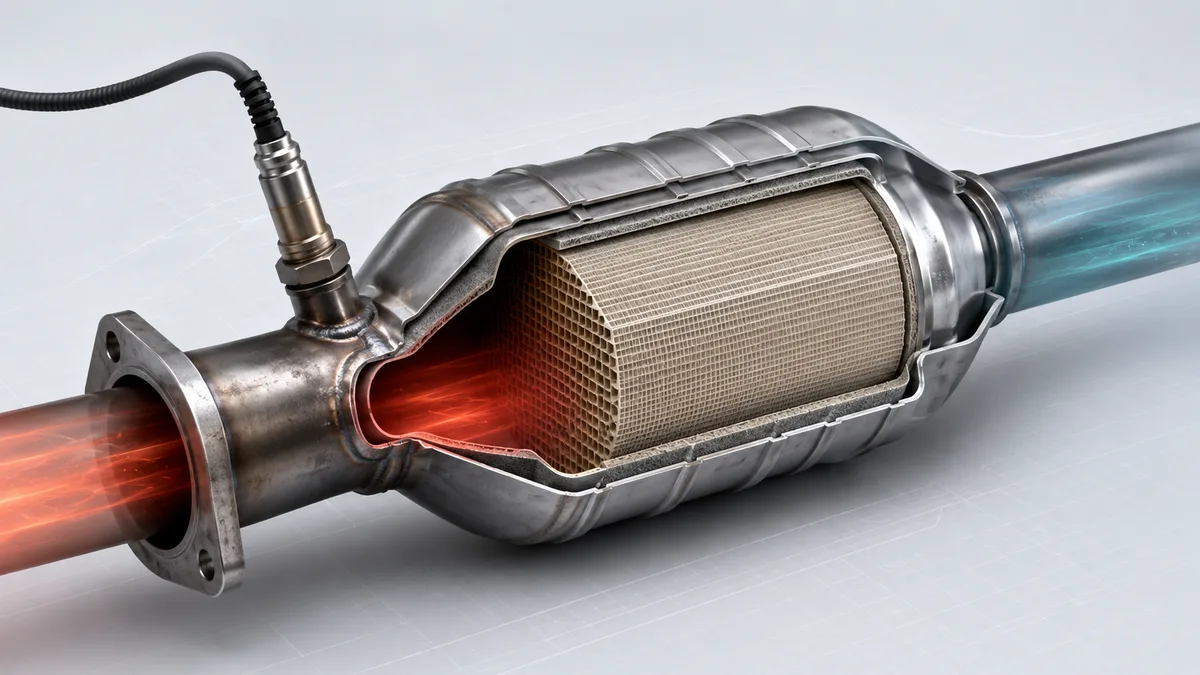
An exhaust device that uses catalyst materials to convert harmful gases into less harmful emissions.
Also called: catalyst · cat · three-way catalyst
What it means
Definition
A catalytic converter sits in the exhaust stream. Its catalyst materials promote chemical reactions that convert unburned hydrocarbons, carbon monoxide and nitrogen oxides into less harmful gases. It treats exhaust after combustion; it does not create engine power.
Why a buyer cares
What it changes
A catalyst-efficiency code does not by itself prove the converter is the root cause. Misfires, fuel-control faults and exhaust leaks can affect what reaches the converter or what the oxygen sensors report.
In practice
Where you meet it
In emissions-system descriptions, inspection failures and diagnostic codes such as catalyst efficiency below threshold.
Two things that look alike
Not the same as
A muffler reduces exhaust noise; a catalytic converter treats exhaust chemistry.
Read next
Related terms
Oxygen sensor (lambda sensor)
An exhaust sensor that reports oxygen concentration so the engine computer can monitor mixture and catalyst operation.
Malfunction Indicator Lamp (MIL)
The dashboard lamp — usually labelled Check Engine — that the OBD-II system switches on when it confirms a fault.
Emissions inspection
A state or local test of a vehicle's emissions performance, often required to register it.
Where this comes from
Sources
Catalyst layout, material and monitoring strategy differ by engine and emissions certification.