Power-assisted disc brakes use a vacuum-assist to provide power to the master cylinder, thereby greatly reducing pedal effortChecked 2026-08-16
Brake master cylinder and booster
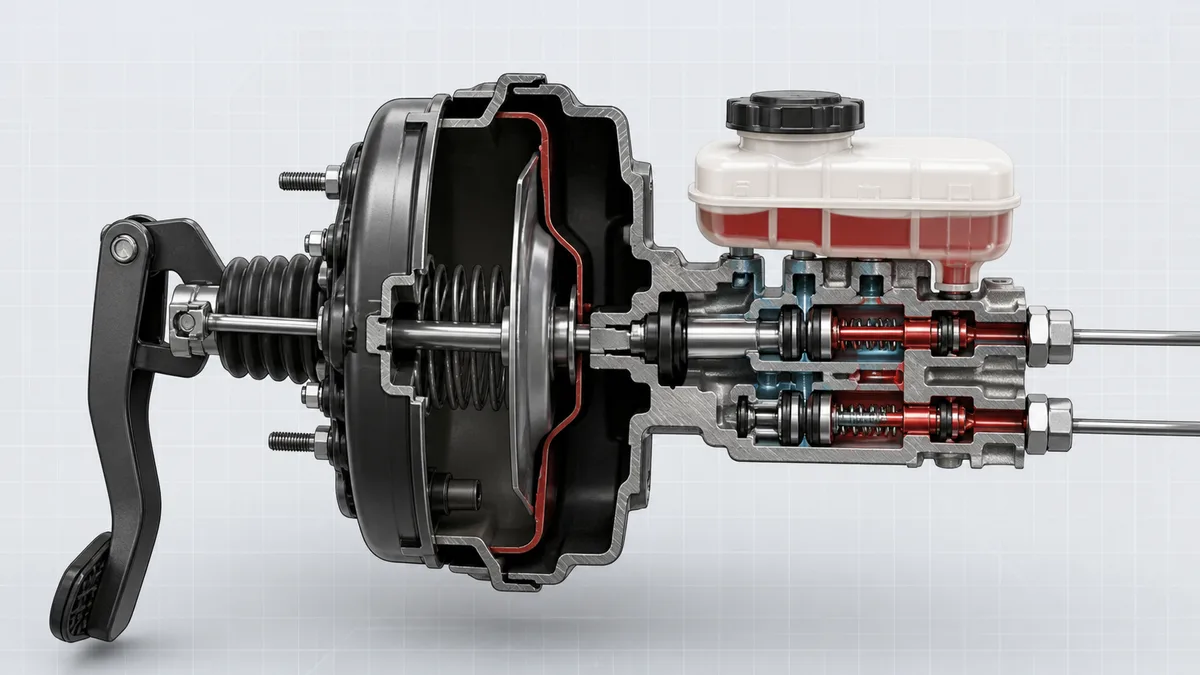
The master cylinder creates hydraulic pressure; the booster reduces how hard the driver must press.
Also called: master cylinder · brake booster · vacuum booster · brake servo
What it means
Definition
Pressing the brake pedal moves the master cylinder, which sends pressurized brake fluid toward the wheel brakes. A brake booster adds assistance between the pedal and master cylinder — commonly using engine vacuum, though electric and electro-hydraulic designs also exist — so the same braking request needs less pedal effort.
Why a buyer cares
What it changes
A hard pedal can point toward lost assistance, while a sinking or unusually soft pedal can involve the hydraulic system. The symptoms overlap enough that the named component should come from an inspection, not a guess.
In practice
Where you meet it
On brake-system estimates and under the hood at the brake-fluid reservoir and booster assembly.
Two things that look alike
Not the same as
The booster assists the driver; the master cylinder creates hydraulic pressure. Neither is the ABS modulator.
Read next
Related terms
Where this comes from
Sources
When you step on your brake pedal, it’s the brake fluid that helps activate your brakes to slow you down.Checked 2026-08-16
Assist type varies by vehicle. The entry does not assign a diagnosis from pedal feel alone.